What Is the S&P 500 Heatmap and How Do You Use It?
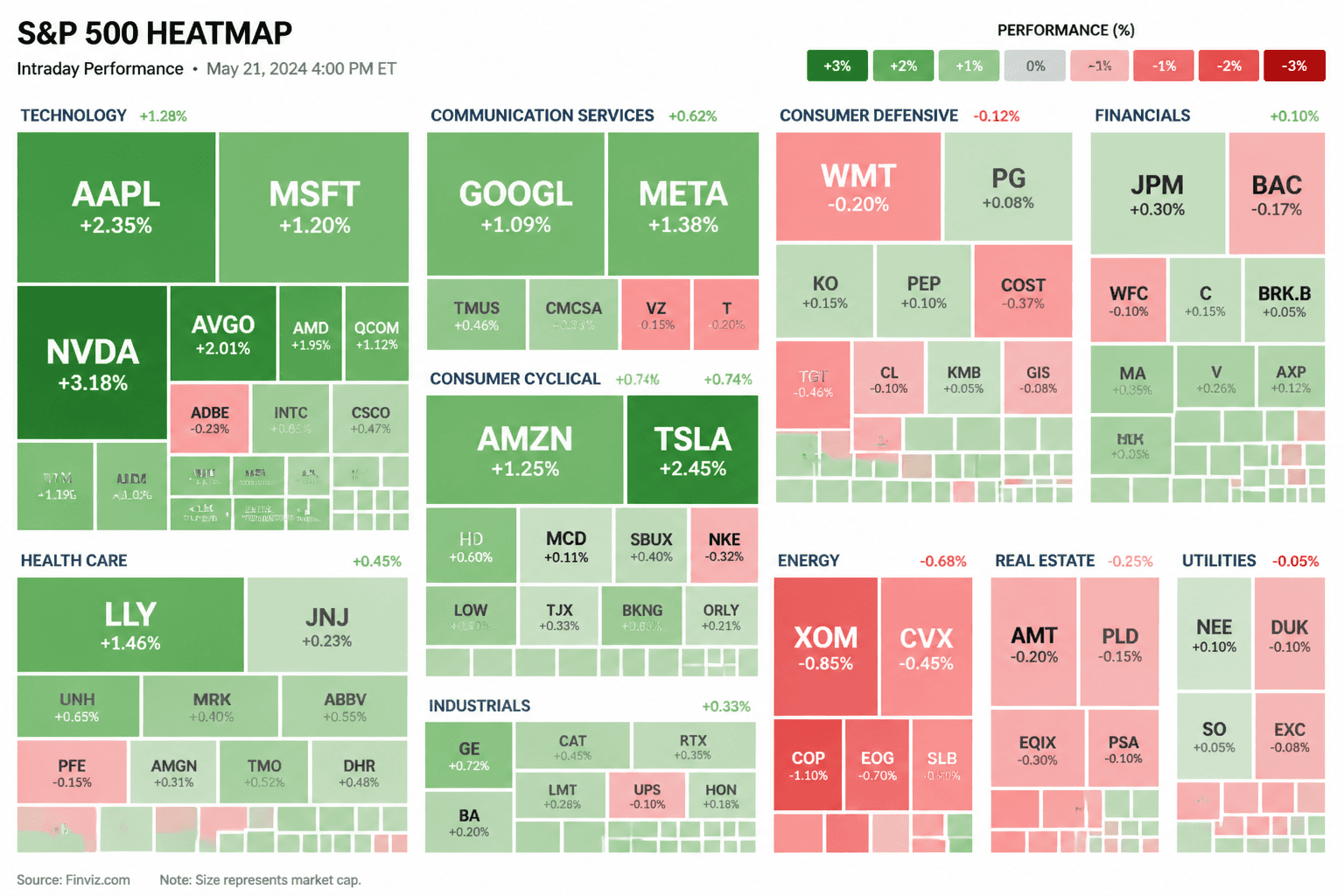
Quick Answer: The S&P 500 heatmap visually represents stock performance across sectors, using color coding to show gains and losses. It helps investors identify sector rotation, spot outperformers, and assess overall market health.
Key Takeaways
- The S&P 500 heatmap displays sector performance through color coding.
- Green indicates gains, while red shows losses.
- It can reveal sector rotation trends and outperforming stocks.
- Daily checks of the heatmap can provide insights into market sentiment.
What Does the S&P 500 Heatmap Show?
The S&P 500 heatmap visualizes the performance of the 500 largest publicly traded companies in the U.S. by sector. Each square represents a stock, with colors indicating performance: green for gains and red for losses. This allows investors to quickly assess which sectors are thriving and which are struggling.
How Does Color Coding Work?
The color coding on the heatmap is intuitive. A deeper shade of green signifies a larger gain, while a darker red indicates a more significant loss. This visual representation makes it easier for investors to spot trends at a glance, instead of sifting through rows of numbers.
How Can You Spot Sector Rotation?
Sector rotation refers to the movement of investments from one sector to another, often influenced by economic conditions. The S&P 500 heatmap is a powerful tool for identifying these shifts.
-
Look for Color Changes: If the technology sector (like Apple, AAPL, or Microsoft, MSFT) turns from green to red while consumer staples (such as Procter & Gamble, PG) shift from red to green, it may signal a rotation towards more defensive stocks.
-
Analyze Performance Over Time: By regularly checking the heatmap, you can track which sectors are gaining or losing momentum, helping inform your investment strategy.
How to Find Outperformers Using the Heatmap
Identifying outperforming stocks is straightforward with the S&P 500 heatmap. Here’s how to do it:
-
Focus on Green Areas: Start by looking at the sectors displaying a lot of green. Within those sectors, identify individual stocks that are performing particularly well, indicated by darker shades of green.
-
Compare Against the Index: Check if these stocks are outperforming the S&P 500 index. For instance, if the healthcare sector is thriving, stocks like Johnson & Johnson (JNJ) could stand out as potential outperformers.
How to Use the Heatmap as a Daily Market Health Check
Using the S&P 500 heatmap daily can provide valuable insights into overall market health. Here’s how to integrate it into your routine:
-
Morning Review: Start your day by checking the heatmap to gauge market sentiment. Are most sectors green or red? This provides a quick snapshot of investor confidence.
-
Spot Trends: Over days and weeks, observe whether certain sectors consistently show strength or weakness. This can help you make informed decisions about your portfolio.
-
Adjust Strategies: If the heatmap indicates a shift towards sectors that align with your investment strategy, consider adjusting your holdings accordingly.
Conclusion
The S&P 500 heatmap is an invaluable tool for retail investors looking to understand market dynamics at a glance. By visualizing sector performance through color coding, it helps identify opportunities and assess overall market health. For a deeper dive into market movements, check out our market heatmap tool on DailyFinz and enhance your investment decisions with our market analysis.
FAQ
What is a sector in the context of the S&P 500?
A sector is a group of stocks that operate in the same industry or market segment, such as technology or healthcare.
How often should I check the S&P 500 heatmap?
Daily checks can help you stay updated on market trends, but monitoring it weekly can also provide valuable insights.
Can the heatmap help with long-term investing?
Yes, by identifying sectors with positive trends, you can make informed long-term investment decisions.
What should I do if I see a lot of red in the heatmap?
A predominantly red heatmap may indicate market weakness. It might be wise to review your portfolio and consider defensive strategies.
Where can I find the S&P 500 heatmap?
You can access the S&P 500 heatmap through platforms like DailyFinz, which offers real-time data and insights.
Related Topics